Billing Scam: How to Spot a Fake Charge and Dispute It Properly
A billing scam rarely looks like theft. It looks like a subscription you might have signed up for and forgotten — a small monthly amount, a plausible company name, a charge that appears on a statement with no context. The design is deliberate: small enough to ignore, familiar enough to doubt yourself, and recurring so that one moment of inattention becomes twelve months of payments.
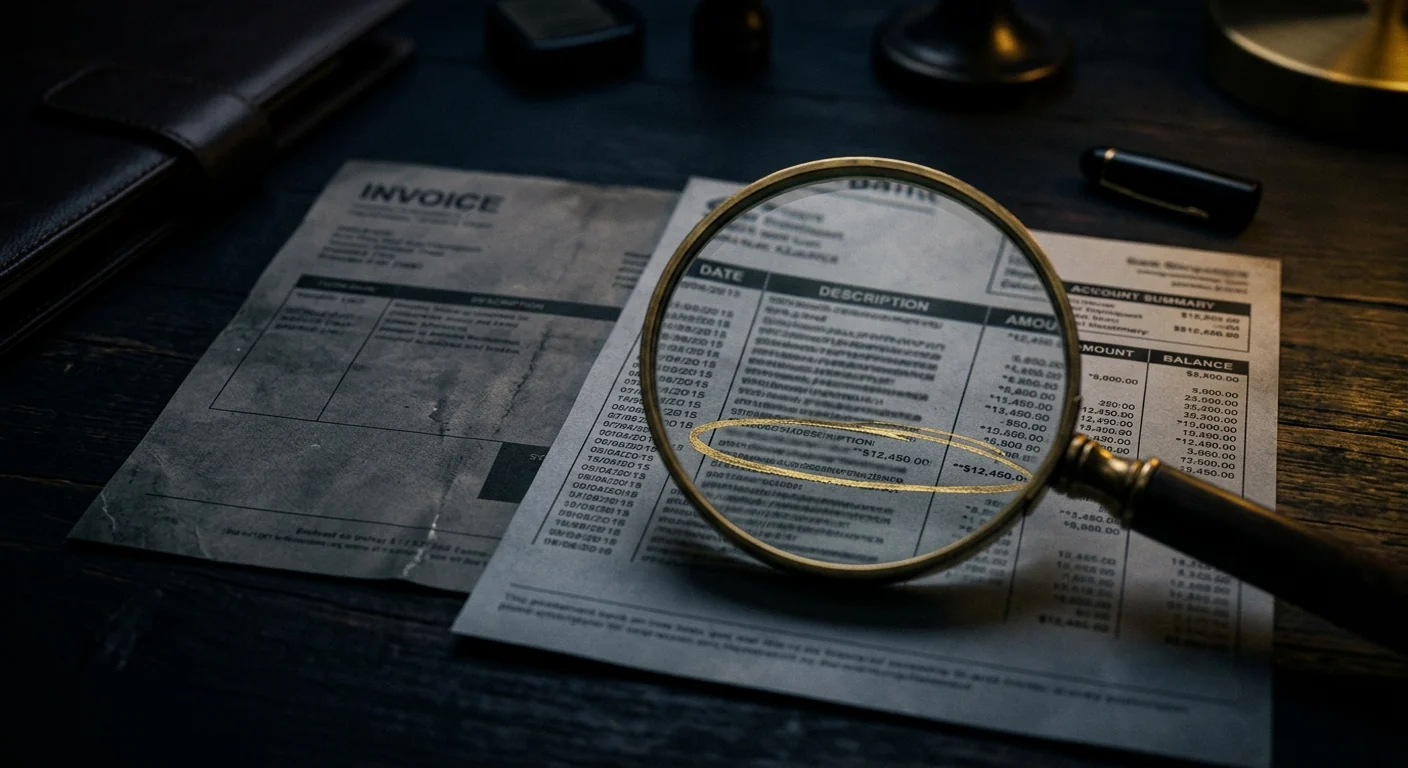
The amount is small on purpose. A charge of $4.99 is below the threshold where most people bother to call the bank, which is exactly why it recurs.
The Short Version
- A billing scam is usually a small recurring charge, not a single large one.
- The descriptor on your statement is chosen to look like a service you might have used.
- Free-trial traps convert to paid subscriptions with terms buried in the signup flow.
- Dispute with the merchant in writing first, then the card issuer — in that order.
- Cancelling the card stops future charges but does not refund past ones.
What a Billing Scam Actually Is
There are three distinct things people call a billing scam, and they need different responses.
The first is a genuinely unauthorised charge: someone used your card number without your knowledge. The second is a deceptive subscription — you did sign up, but the terms were hidden, the trial converted silently, or cancelling is deliberately impossible. The third is a fake charge notification, where no charge exists at all and the email is designed to make you call a number.
Sorting out which one you are facing determines everything. An unauthorised charge is a fraud dispute with your card issuer. A deceptive subscription is a consumer-protection complaint and a merchant dispute. A fake notification is neither — it is a phishing attempt and the correct action is to delete it and check your account directly.
Spotting a Fake Charge on Your Statement
Statement descriptors are the hardest part, because scammers choose them to be forgettable. A few patterns are worth knowing.
- A company name you cannot find. Search the exact descriptor in quotes. A real merchant has a website, a support page and a paper trail. A shell billing company often has only a registration record.
- A descriptor that mimics a known brand with a small variation — an extra letter, a different suffix, a generic word like "digital" or "services" appended.
- Small and recurring. The same amount on the same date each month, small enough to be plausible as a subscription you forgot.
- Charges that began after a free trial you signed up for with a card "for verification".
- Multiple small charges from different descriptors in the same week, which usually means a card number has been sold and is being tested.
The Free-Trial Trap
The most common legitimate-looking billing scam is a free trial that converts. The signup flow asks for a card "to verify you are human", the trial period is short, the conversion price is disclosed in small text or behind a link, and the cancellation route is a phone line with limited hours.
This is often legal, which is what makes it frustrating. The charge is authorised in the sense that you entered the card and accepted terms. The remedy is therefore not a fraud claim but a consumer-protection argument: the terms were not clearly presented, or cancellation was made unreasonably difficult.
Practical defences: use a virtual card number with a low limit for any trial, note the conversion date in your calendar the moment you sign up, and cancel before the trial ends even if you intend to keep the service — you can usually resubscribe.
The Dispute Route, in the Right Order
Order matters, and doing it backwards is the most common reason a valid dispute fails.
- Contact the merchant in writing. Email or a support ticket, not a phone call, so there is a record. State the charge, the date, the amount, and that you dispute it. Ask for a refund and a cancellation confirmation.
- Keep the evidence. The statement line, the merchant's reply or their silence, the signup terms if you have them, and any cancellation attempt.
- Then dispute with your card issuer, using the term "unauthorised charge" only if it genuinely was. For a deceptive subscription, describe it as a charge you did not authorise in the amount or on the terms presented.
- Ask for a new card number if the merchant has your details and the charges continue. A dispute does not always stop a recurring billing agreement.
- Escalate to a regulator if the issuer refuses and the amount justifies it — the CFPB in the US, the Financial Ombudsman in the UK.
Stopping Future Charges
A refund and a cancellation are different things. Getting money back does not necessarily end the billing agreement, and a merchant that has your card details can keep charging.
The reliable fix is a new card number. Ask the issuer to replace the card and to block the merchant's recurring billing identifier, which is a separate instruction from replacing the card. Some issuers offer a merchant block; ask specifically.
For subscriptions you do want to keep, use a virtual card number per merchant. It limits the damage if the merchant is breached, and it makes cancellation a matter of closing one number rather than arguing with a support desk.
Reporting a Billing Scam
Report to your card issuer as a dispute, and separately to your national consumer protection body — the FTC in the US, the ACCC in Australia, Trading Standards or Citizens Advice in the UK. These reports are aggregated, and aggregated reports are what produce enforcement against billing operations that individual disputes cannot touch.
If the charge came from a site you reached through an advert, report the advert to the platform as well. Ad networks act on billing-fraud reports because the advertiser is their customer, and removal is faster than any legal route.
Finally, check whether the card number appears in a breach. A single unexpected charge is often the first visible sign that a number was compromised months earlier, and the same number may be in use elsewhere.
Questions people ask
How do I know if a charge on my card is a scam?
Search the exact descriptor in quotes. A real merchant has a website, a support page and a paper trail. A shell billing company often has only a registration record. Small recurring amounts from an unfindable company are the classic pattern.
Should I dispute with the merchant or the bank first?
The merchant first, in writing, so there is a record. Card issuers routinely reject disputes where there is no evidence the cardholder tried the merchant, and a rejection restarts the clock.
Does cancelling my card stop the charges?
Replacing the card usually stops them, but ask the issuer to also block the merchant recurring billing identifier, which is a separate instruction. A dispute alone does not always end a billing agreement.
Is a free trial that charges me a scam?
It can be legal but deceptive. If the conversion terms were hidden or cancellation was made unreasonably difficult, that is a consumer-protection argument rather than a fraud claim. Dispute it as a charge you did not authorise on the terms presented.
What if the charge is only a few dollars?
Small amounts are chosen precisely because people ignore them. Report it anyway — a single small charge often means the card number is being tested, and the same number may be used for larger amounts later.
Check the address before you send anything
A free scan reads public chain data in your browser: balance, activity, counterparties and flags. No wallet connection, no seed phrase, no signup.
Primary sources and further reading
- FTC on negative-option billing — how trial-to-subscription traps are treated and how to dispute them
- CFPB complaint portal — escalation route when a card issuer refuses a valid dispute
- FBI Internet Crime Report — card-not-present fraud volumes
- Action Fraud (UK) — UK reporting route for card and billing fraud
Related guides
Information only. We never promise recovery.