ETH Wallet Tracker: Following ERC-20 Transfers and Approvals
Ethereum records more about a wallet than Bitcoin does, and most of it is invisible on the default view. A payment can arrive as an internal transaction that never appears in the main list. A drain can happen through an approval you granted months earlier, with no transfer from your address at all. Learning to read those two things is the difference between an ETH trace that works and one that misses the actual theft.
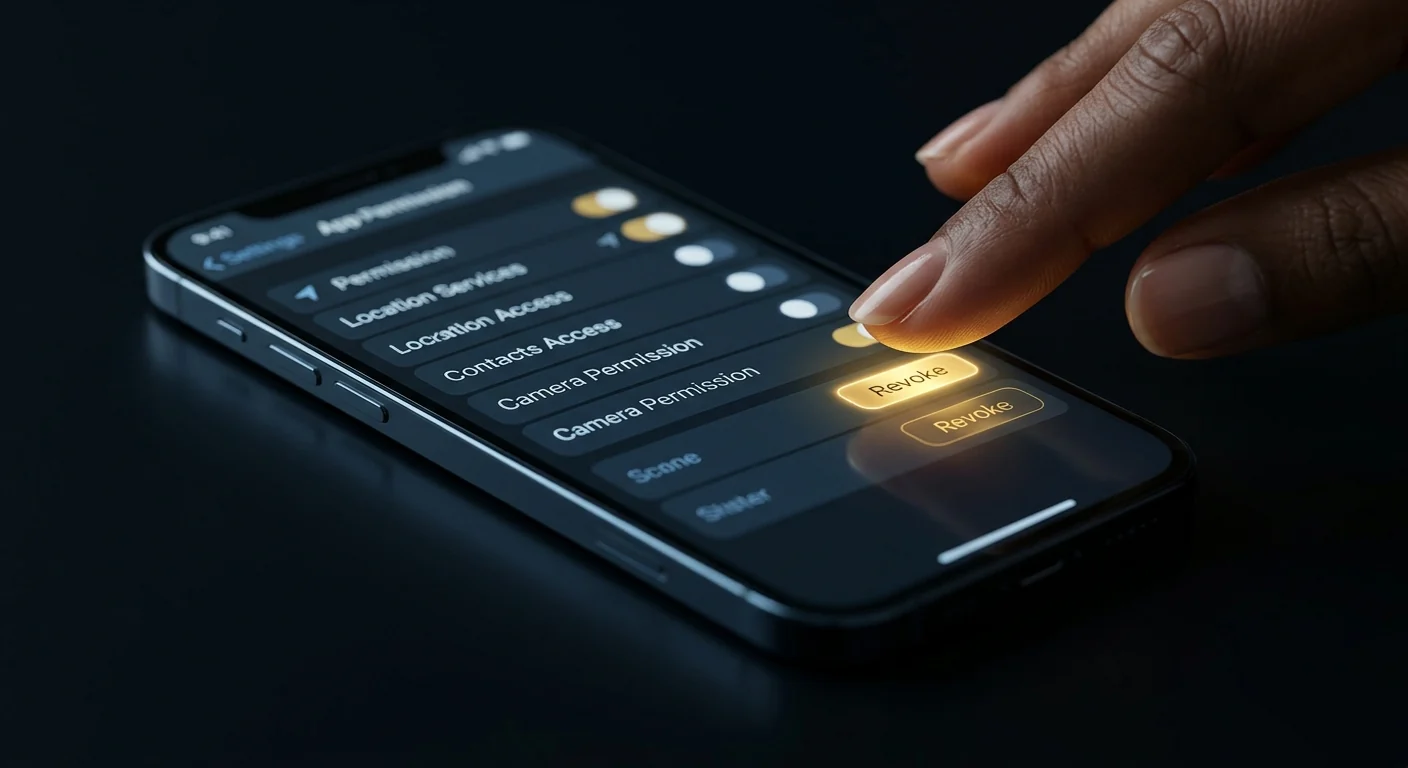
The theft often is not a transfer. A token approval lets someone else move your funds, so the outgoing transaction is signed by them, not by you — and your wallet history shows nothing.
The Short Version
- Ethereum has three kinds of value movement: native ETH, ERC-20 token transfers, and internal transactions created by contract calls.
- Internal transactions do not appear in the standard transaction list. You must enable them in the explorer.
- Token approvals are the most common drain vector. An approval is a standing permission, not a transfer.
- A drain executed through an approval shows the outgoing transfer coming from the attacker, not from your address.
- ETH traces break at bridges, mixers and privacy pools — the same three places as every other chain.
What an ETH Tracker Shows That a BTC Tracker Does Not
Bitcoin's model is simple: inputs and outputs, all of them native currency. Ethereum's model is a state machine where every transaction can call arbitrary code, and that code can move value on your behalf. The result is a much richer record and a much easier way to be confused.
Four things exist on Ethereum that have no Bitcoin equivalent.
ERC-20 token transfers. Most value on Ethereum is not ETH. It is USDC, USDT, DAI, LINK and thousands of other tokens, each a contract with its own ledger. A token transfer is a function call on that contract, not a native value movement, so it appears in a separate tab.
Internal transactions. When a contract sends ETH onward — a DEX paying out a swap, a multisig releasing funds, a drainer forwarding to its operator — that movement is an internal transaction. It is real, it is on chain, and it is hidden by default in most explorers.
Token approvals. An approval is a persistent permission granting another address the right to spend your tokens up to a limit. It is not a transfer. It costs a small gas fee and moves nothing, which is why people grant them without noticing.
Contract interactions. Every swap, stake, mint and claim is a call to a contract with calldata. The calldata is what actually specifies the action, and it is readable if you know the function signature.
Native ETH vs ERC-20 Token Transfers
The two live in different tabs and mean different things, and mixing them up produces wrong loss figures.
Native ETH movements appear in the main transaction list. Each row is a transaction from one address to another with a value in ETH. This is the simplest view and the one people default to.
ERC-20 transfers appear in a separate "ERC-20 Token Txns" tab. Each row shows the token contract, the token name, the amount in token units, and the from and to addresses. Critically, the "from" address is not always the transaction sender — a contract can move tokens on behalf of a user, which is exactly what a swap or a drain does.
| What you are looking for | Where to look | Common mistake |
|---|---|---|
| ETH sent or received | Main transaction list | Missing internal ETH from contract calls |
| USDC or USDT moved | ERC-20 token tab | Reading the token amount as if it were ETH |
| Funds forwarded by a contract | Internal transactions | Not enabling the toggle at all |
| Permission granted to a stranger | ERC-20 token approvals tab | Assuming an approval is a transfer |
Token amounts also need care. USDC has six decimals, so a raw value of 500000000 is 500 USDC. Most explorers convert this for you, but raw calldata does not. If you are reading a transaction's input data directly, divide by ten to the power of the token's decimals before you write a number in a report.
Reading Internal Transactions
Internal transactions are the single most-missed element in amateur ETH tracing, and they are where a lot of stolen money actually moves.
An internal transaction is created when a smart contract transfers ETH as part of executing a call. It has no separate transaction hash of its own — it is nested inside a parent transaction — but it has a from, a to, a value and a trace address that identifies its position in the call tree.
Why this matters for a victim: if your funds went through a DEX, a mixer contract, or a drainer that forwards ETH, the onward movement is internal. The parent transaction shows you interacting with a contract. The internal transaction shows the contract paying someone else. Without the second view, the trail appears to end at a contract address.
To read them:
- Enable the internal transactions view on the address page, or open the "Internal Txns" tab on a specific transaction.
- Look at the call tree, not just the flat list. Nested calls show the order of operations, which tells you whether a payout happened before or after a fee was taken.
- Note the depth. A transfer at depth 3 came from a contract called by a contract called by your transaction. That chain of custody is worth recording.
Token Approvals: The Hidden Risk Line
An approval is the most consequential thing most people do on Ethereum without realising it. It deserves its own section because it changes what a trace even looks like.
When you approve a token, you are calling the token contract and setting a spender address with an allowance. That spender can then move up to the allowance from your balance at any time, without any further action from you. The two common forms are a specific amount and "unlimited", which is encoded as the maximum uint256 value.
Unlimited approvals are the default in most DeFi interfaces because they save gas on repeat use. They are also what drainers exploit: a single malicious approval, granted once, gives an attacker permanent access to that token until you revoke it.
What this does to a trace:
- The drain transaction is not from your address. It is from the attacker's address, calling transferFrom on the token contract. Your wallet history shows an outgoing token transfer with a "from" that is not you.
- There is no ETH movement. The attacker pays the gas. Your ETH balance is untouched, which is why people check their ETH, see it intact, and conclude nothing was stolen.
- The approval transaction is the evidence. It is the earlier transaction where you granted the permission, and it names the spender address. That spender is the address to report.
To see every approval on an address, use the token approvals tab on Etherscan or a dedicated revoke tool. It lists each token, each spender and the remaining allowance. Anything marked unlimited and pointed at an address you do not recognise is a live risk, whether or not it has been used yet.
Following Funds Into a DEX Swap
Most stolen ETH is swapped within minutes, because the operator wants a stablecoin or a privacy-oriented asset rather than a volatile one. Following that swap is a routine operation once you know where to look.
A swap on a DEX like Uniswap produces one transaction with several internal movements: your token leaves your address, enters a pool contract, and a different token leaves the pool and enters the recipient's address. All of it is in the same transaction, visible in the internal transactions and token transfer tabs.
The steps:
- Open the swap transaction and read the token transfer list. You will see at least two transfers: input token out, output token in.
- Identify the recipient of the output token. That address is the operator's, and it is usually different from the address that initiated the swap if a router or a helper contract was used.
- Ignore the pool address. It will appear as both sender and receiver of large amounts and is shared infrastructure.
- Follow the output token from the recipient. The next hop is typically a transfer to a centralised exchange deposit address.
Aggregators add a layer. A swap routed through 1inch or a similar aggregator may split across several pools in one transaction, producing a dozen token transfers. The rule still holds: find the address that ends up with the output token and is not a pool contract.
If the output is a bridged asset — USDC.e, or a wrapped token from another chain — the funds may have left Ethereum entirely. Check the bridge contract in the transaction's logs and take the destination hash from there.
Where ETH Traces Break: Bridges and Mixers
Ethereum traces break in three predictable places. Knowing them in advance stops you from wasting effort or, worse, from paying someone who claims they can see through them.
| Break point | What happens | What remains possible |
|---|---|---|
| Bridge to another chain | Funds are locked on Ethereum and minted on the destination | The bridge publishes the destination transaction; continue there |
| Mixer or privacy pool | Deposits are pooled and withdrawn to fresh addresses | Timing and amount correlation sometimes reconnects them |
| Centralised exchange | Funds reach a KYC'd platform | Subpoena target; the identity record exists |
Bridges are the least damaging break, because they are transparent by design. A bridge must record which deposit corresponds to which mint, or it could not function. That record is on chain, and the destination transaction hash is usually visible in the bridge contract's event logs. Following it is mechanical work, not detective work.
Mixers are the real break. A mixer accepts deposits from many users and lets them withdraw to fresh addresses, deliberately severing the link. Statistical correlation — matching a deposit and a withdrawal by amount and timing — sometimes works, and it is what commercial tracing firms sell. It is also probabilistic, which is why a mixer-based trace is rarely enough on its own for a court.
The exchange terminus is the outcome you want. It converts an anonymous address into a company with a compliance team, and that is the point at which law enforcement can act. Everything before it is context; the exchange is the lever.
Our free wallet tracer covers the native, ERC-20 and internal views in one pass and flags approvals that are still live on an address. If you have already been drained, the revocation guide is the immediate next step — revoking does not recover what left, but it stops a second drain.
Questions people ask
How do I track an Ethereum wallet?
Open the address on Etherscan or any EVM explorer and check four tabs: the main transaction list for native ETH, the ERC-20 tab for token transfers, internal transactions for value moved by contracts, and the approvals tab for standing permissions. Most people miss the last two.
Why does my ETH balance look fine after a token drain?
Because a drain through an approval is paid for by the attacker and moves only tokens. Your ETH is untouched, so the native balance looks normal. Check the ERC-20 tab and the approvals tab instead.
What is an internal transaction?
A value movement created by a smart contract during a call, rather than by a user directly. It has no separate hash and is hidden by default in most explorers. Enabling the internal transactions view is essential for tracing funds that passed through a DEX or a drainer.
Can ERC-20 transfers be traced?
Yes. Every token transfer is a logged event on the token contract with from, to and amount. Tracing works the same way as native ETH, except the movement appears in the token tab and the sender may be a contract rather than a person.
Where do Ethereum traces usually stop?
At a bridge to another chain, at a mixer or privacy pool, or at a centralised exchange deposit address. The exchange is the useful terminus because it holds identity records that a subpoena can reach.
Check the address before you send anything
A free scan reads public chain data in your browser: balance, activity, counterparties and flags. No wallet connection, no seed phrase, no signup.
Primary sources and further reading
- Ethereum developer documentation — accounts, transactions, tokens and the EVM execution model
- ERC-20 specification — the token standard behind approvals and transferFrom
- FBI Internet Crime Complaint Center — federal reporting portal for crypto fraud
- OFAC Sanctions List Service — designated crypto addresses including Ethereum
Related guides
Information only. We never promise recovery.