How Free Blockchain Tracing Actually Works
Tracing sounds like detective work. Mechanically it is closer to reading a very large, very boring public ledger with a good index. This page walks through what a free tracer does between your click and the result, and marks the three places where the process genuinely stops. For the fuller picture of how the discipline is practised, see our guide to cryptocurrency tracing.
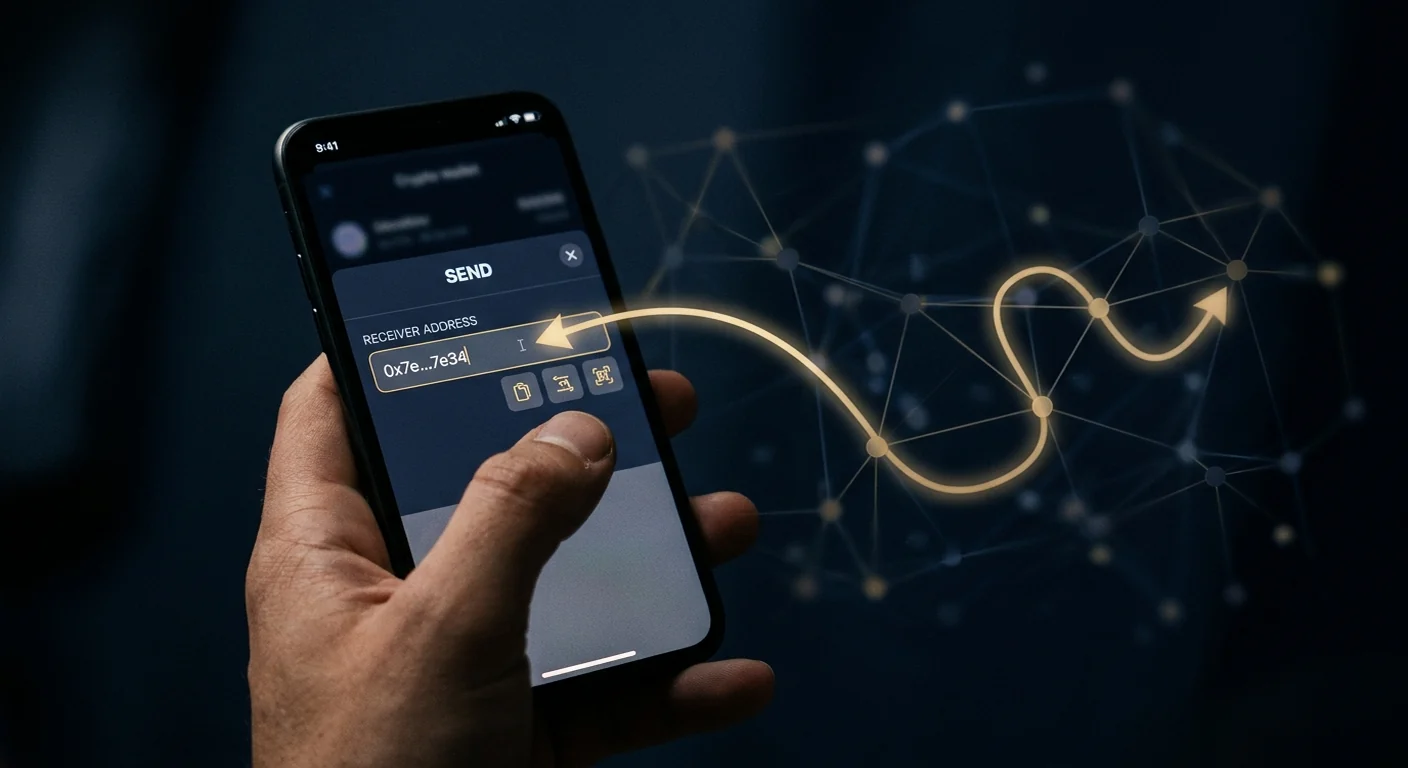
No magic, no database of names. A tracer is an index over public data. Understanding the index tells you exactly how far the answer can go.
The Short Version
- A tracer parses the address, queries a node for account state, then walks transaction history through an indexer.
- Free tools use public RPC endpoints, which cap history depth and rate-limit heavy queries.
- The chain records amounts, addresses, timestamps and hashes. It does not record names, intent, or identity.
- Clustering heuristics group addresses that appear to share an owner. They are inferences, and they are sometimes wrong.
- The process stops at three walls: history depth, chain boundaries, and the identity gap. None of them is a bug.
Step One: Parsing the Address
Before any query happens, the tool has to work out what it is looking at. Address formats are chain-specific and mostly self-describing.
| Chain | Format signal | What the tool infers |
|---|---|---|
| Bitcoin | Starts with 1, 3, or bc1 | Legacy, P2SH, or SegWit, and therefore which script type to query |
| Ethereum and EVM chains | 0x followed by 40 hex characters | An EVM address, but not which EVM chain, so the tool must ask you or try several |
| Tron | Starts with T, 34 characters | A Tron account, usually holding USDT-TRC20 |
| Solana | Base58, 32 to 44 characters | A Solana account, which may be a wallet or a program |
This step is where most user errors happen. A single mistyped character in a base58 address produces a different but perfectly valid address, and the tracer will happily report on a wallet that has nothing to do with you. Copy, never retype.
Step Two: Asking a Node for Account State
With the chain identified, the tool asks a node for the current state of the account: balance, nonce or sequence number, and whether the account exists at all. This is a single fast call, and it is the part that always works.
Free tools do this against public RPC endpoints. Those endpoints are shared infrastructure, and they behave accordingly: they rate-limit, they cap response sizes, and some of them block browser requests outright for abuse reasons. When a free tracer says "source unreachable", this is almost always the layer that failed, not the blockchain.
Step Three: Walking the History
Balance is one number. History is the interesting part, and it is where the real engineering sits. A node can tell you an account's state, but listing every transaction an address ever touched requires an index, because the chain stores transactions in blocks, not per address.
Indexers solve this by building a lookup from address to transaction list as blocks arrive. Free tools either use a public indexer or ask a node for a bounded slice of history. That bound is the first wall.
In practice, a free tracer will show you the most recent 25 to 100 records for a busy address. For a wallet with a handful of transactions, that is the complete history. For an exchange hot wallet with millions, it is a rounding error, and the tool should say so rather than implying completeness.
Step Four: Following the Money
This is the step people imagine when they hear "tracing", and it is the step free tools do least of. Following funds means taking each output of a transaction and asking where it went next, then repeating. Do that naively and the graph explodes: one hop becomes fifty, fifty become thousands.
Serious tracing applies heuristics to keep the graph manageable. The common ones:
- Change detection. In a Bitcoin transaction with several outputs, one is usually change returning to the sender. Identifying it correctly is what keeps a trace from wandering into unrelated wallets.
- Common-input clustering. If two addresses are ever spent together in one transaction, they probably share an owner. This is the workhorse heuristic and the source of most labelling.
- Peel chains. A pattern where a large amount is repeatedly split, with a small portion peeled off to a new address each time. Common in laundering and in exchange withdrawal batching.
- Deposit-address matching. Recognising the pattern of an exchange deposit address, which is usually a fresh address that sweeps to a hot wallet.
Every one of these is a probabilistic inference. They are right often enough to be useful and wrong often enough that a conclusion resting on a single one should be treated as a lead.
The Three Walls Every Free Tracer Hits
| Wall | What happens | Can it be overcome? |
|---|---|---|
| History depth | Public nodes return a bounded slice of records | Yes, with an archive node or a paid indexer |
| Chain boundaries | Funds move to a bridge or an exchange and the trail leaves the chain you are reading | Partly, by tracing the destination chain, if the tool supports it |
| The identity gap | The chain records addresses, never people | No. Only a legal request to a custodian can close it |
The third wall is the one that matters most and is discussed least. No amount of tracing, free or paid, converts an address into a name. What converts it is an exchange or a bank responding to a subpoena, and that requires a report, a case number, and an authority willing to ask.
What a Trace Can and Cannot Prove
A trace can prove, to a reasonable standard, that funds moved from address A to address B at a specific time in a specific amount. That is a strong, checkable claim, and it is often enough to support a fraud report.
A trace cannot prove who controlled A or B, why the transfer happened, or that the recipient knew anything. Those require evidence from outside the chain: messages, account records, bank statements, testimony.
This is why the strongest crypto fraud cases are built from two halves. The chain supplies the movement. Everything else supplies the meaning. A tracer gives you the first half quickly and for free. The second half is the work.
Two Ledger Models, Two Different Traces
Tracing works differently depending on how the chain records value, and confusing the two models is the most common reason a beginner's trace goes wrong.
UTXO chains, of which Bitcoin is the main one, record value as a set of unspent outputs. A transaction consumes some outputs and creates new ones. There is no "balance" stored anywhere; a wallet's balance is the sum of the outputs it can spend. This is why change detection matters so much: in a transaction with three outputs, one is usually change returning to the sender, and misidentifying it sends your trace into a stranger's wallet.
Account chains, which include Ethereum, Tron, Solana and the EVM L2s, store a balance per address and increment or decrement it. There is no change output to detect, which makes the first hop easier and the later hops harder, because funds can be split across dozens of addresses in a single contract call with no obvious "main" path.
| Model | Chains | Hardest part of the trace |
|---|---|---|
| UTXO | Bitcoin, Litecoin and forks | Identifying change correctly at every hop |
| Account | Ethereum, Tron, Solana, L2s | Following value through contracts, swaps and bridges |
If your case is on an account chain and the funds passed through a decentralised exchange, the "transfer" you are looking for may not exist as a simple send. It may be a swap inside a contract, with the output going to a different address entirely. That is where free tools most often lose the trail.
What Happens When Funds Reach a Privacy Tool
At some point in a serious case, funds enter something designed to break the link: a mixer, a privacy pool, or a chain with shielded transactions. What happens next is worth understanding, because it determines whether further tracing is worth your time.
Mixers pool deposits from many users and pay out to fresh addresses. The on-chain record shows a deposit and, later, an unrelated withdrawal. Statistical analysis can sometimes narrow the set of possible withdrawals, but it cannot prove a specific link, and a good mixer with a large pool defeats even that.
Privacy chains and shielded pools go further: the amount, sender and recipient are not published at all. There is nothing to trace, because there is no public record of the transfer.
In both cases the honest answer is that the trail ends for a civilian analyst. Law enforcement sometimes has additional tools, and exchanges sometimes have records of the deposit that preceded the mixing, but neither is something a free tracer can reach.
Questions people ask
Does tracing a wallet require special software?
No. A public block explorer can do a basic trace by hand, one transaction at a time. A tracer automates the walking and the formatting. The underlying data is identical.
Why do free tracers sometimes fail to load a wallet?
Almost always because a public RPC endpoint rate-limited or refused the request, or because the browser's request was blocked by the endpoint's CORS policy. The blockchain is not down. A tool that tries several endpoints will usually succeed where a single-endpoint tool fails.
Can blockchain analysis identify a scammer?
It can identify the addresses a scammer used and, sometimes, the exchange deposit address where funds landed. Identifying the person behind those addresses requires the exchange to respond to a legal request, which needs a police report or a court order.
What is address clustering and is it reliable?
Clustering groups addresses that appear to share an owner, usually because they were spent together in one transaction. It is reliable enough to guide an investigation and not reliable enough to be the sole basis of an accusation.
Is a transaction hash enough evidence on its own?
It proves the transaction exists and what it did. It does not prove who sent it or why. For a bank or police report, pair the hash with the date, the amount, the counterparty address, and your own account records.
What is a hop in blockchain tracing?
One movement of funds from one address to another. A trace is a sequence of hops. Most consumer cases resolve in two to five hops, because that is how long it takes funds to reach an exchange deposit address.
Can tracing work if the scammer used a new address for every payment?
Yes, and it is easier in one sense: each payment is a separate starting point. It is harder in another, because the addresses do not connect to each other on-chain, so you cannot build a single picture of the operation from the ledger alone.
Check the address before you send anything
A free scan reads public chain data in your browser: balance, activity, counterparties and flags. No wallet connection, no seed phrase, no signup.
Primary sources and further reading
- Bitcoin: A Peer-to-Peer Electronic Cash System — the original design document describing the public ledger
- Ethereum developer documentation — account model, transactions and logs
- Chainalysis — published methodology on clustering and tracing
- OFAC sanctions list search — authoritative sanctions designations including addresses
Related guides
Information only. We never promise recovery.